The Equity Lens Series: A Curated discussion series where grassroots knowledge is documented, synthesized and presented back to policy tables

Updated: Sep 11, 2025
When leaders of coastal communities, fisherfolk, policymakers, and civil society met in Accra for the Climate Investment Workshop in September 2025, the exchanges were honest, difficult, and urgent. The gathering surfaced a central tension: climate finance in Africa is not merely a technical matter of flows and metrics. It is about power, equity, and justice. Who decides how climate funds are allocated? Who carries the risks of failure when investments ignore social realities? And whose voices are excluded when decisions are made about adaptation and resilience?
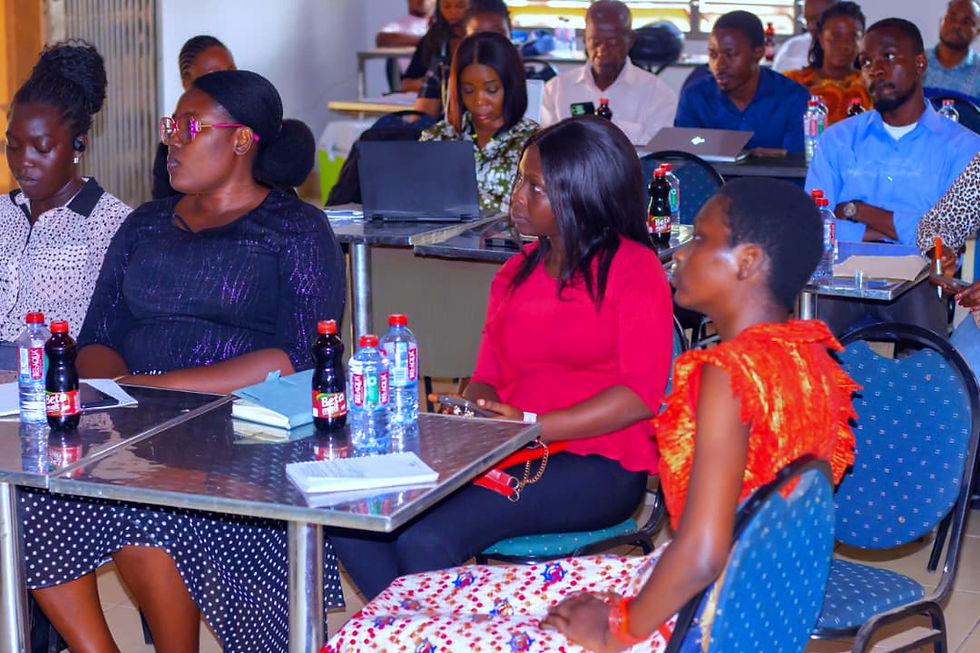
Participants insisted that finance must respond to community priorities. Rights-based tools such as Free, Prior, and Informed Consent (FPIC) and gender-responsive budgeting were not presented as abstract frameworks but as demands rooted in lived experience. The workshop ended with a Declaration from the Shoreline, calling for accountability, fairness, and transparency in climate investments. That declaration should not remain a document on paper. It needs to live in the debates shaping climate policy at national, continental, and global levels.
This is the task FIDEP Foundation in collaboration with AbibiNsroma Foundation is taking forward through the Equity Lens Series.
What is the Equity Lens Series?
The series will publish quarterly practice-based papers that distill workshop insights into provocative, action-oriented reflections. These will not resemble technical reports buried on a shelf. They will be sharp interventions that challenge assumptions and open new pathways for dialogue. Each essay will be co-written with policymakers, practitioners, academics, and community leaders who share responsibility for shaping climate action.
Emerging themes from the workshop already point toward urgent lines of inquiry, including but not limited to:
Decision-Making and Equity: How can Africa shift from being a recipient of externally driven climate finance decisions to becoming a co-designer of funding frameworks that embed equity and community agency?
Risk and Accountability: Given the rapid rise in debt distress across Africa, what safeguards are needed to prevent climate finance from becoming another driver of financial vulnerability, particularly in countries like Ghana where sovereign debt levels constrain fiscal space?
Bridging Testimonies and Policy: What are the most effective pathways for transforming community testimonies of coastal erosion, oil pollution, and displacement into actionable levers that shape national adaptation plans and international negotiations?
These are the kinds of questions that will drive each edition of the Equity Lens Series.
Why Does It Matter?
The Equity Lens Series provides a channel for ideas that emerge from coastal community experiences to shape high-level debates. Climate finance is often treated as a technical negotiation between governments and investors. Yet without community testimony and grounded analysis, the result is policy that looks good on paper but fails on the ground.
This series helps bridge that divide. It positions the voices of those most affected by climate disruption within influential platforms such as African Union–ECA forums, UNFCCC processes, and the G20/T20. It gives policymakers tested insights into what works, and it reminds investors that financial instruments cannot be separated from questions of justice and accountability.
For FIDEP, this is also about shaping identity; rooted in practice has a responsibility to speak across boundaries—connecting communities, governments, and investors through ideas that are both rigorous and accessible. The Equity Lens Series becomes a living record of that responsibility.
How It Will Work
Every quarter, FIDEP will identify a theme from ongoing debates and shape it into advocacy papers. This process will not be academic in the narrow sense; it will be collaborative, with voices from across sectors co-authoring each piece. This approach ensures that the paper remain grounded in practice but strong enough to influence policy dialogue. The papers will be released as digital publications enriched with visuals, infographics, and excerpts for wider media uptake. They will circulate across African climate networks and global policy spaces.
To ensure accessibility, parts of each paper can be reworked into op-eds, policy briefs, or shorter features in sustainability magazines. The aim is to place ideas where they can move decision-makers and mobilize communities.
A Living Conversation
The Equity Lens Series represents an ongoing conversation, not a one-off outcome of a single event. Climate investments will determine how societies adapt to an uncertain future. Yet investment without equity risks deepening divisions rather than building resilience. This series invites policymakers, corporations, and community leaders to engage with uncomfortable but necessary questions.
The shoreline voices that shaped the Accra workshop are not marginal; they are central to the search for fair and effective climate solutions. Carrying those voices into the corridors of power is not only a duty but also an opportunity to create climate finance systems that are accountable, inclusive, and transformative.


Comments